
How to Mix Sourdough in a Spiral Mixer (Step‑by‑Step Guide)
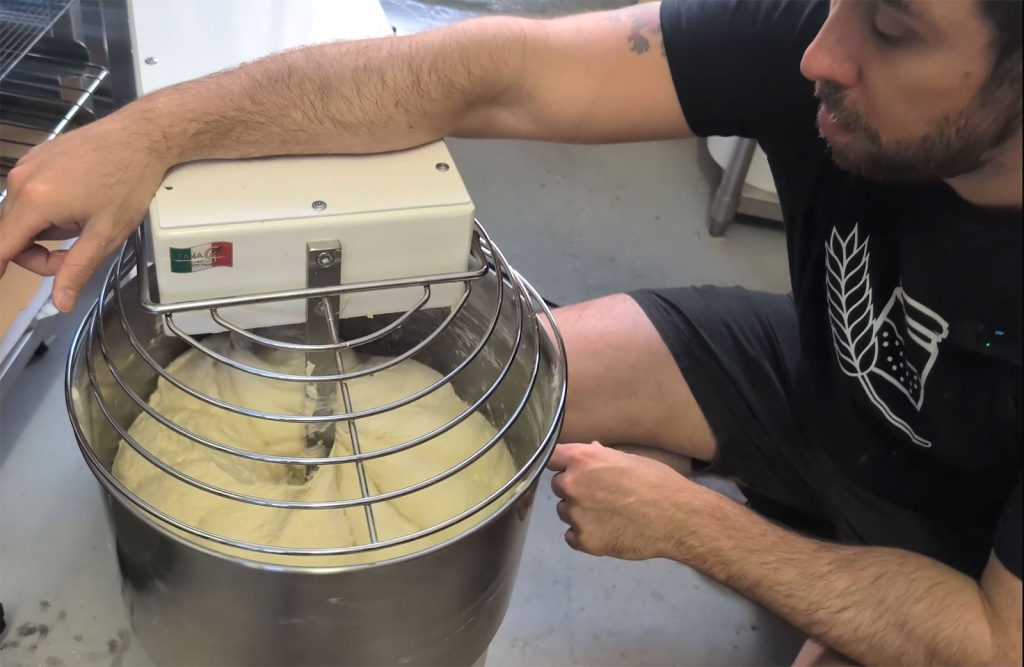
Mixing sourdough in a spiral mixer can be a game changer — but if you’re not careful, it can also ruin your dough. In this post, I’ll show you how to mix sourdough in a spiral mixer — mine is the Famag 20 (a 20 kg mixer) — step by step, with the full video linked at the bottom of the post.
I’ll also share my preferred dough temperature, mixing times, and a recipe you can scale from one loaf to multiple.
📋 Ingredients: Start with the Right Temperature
Getting your ingredients to the right temperature is one of the most important parts of the mixing process.
Target dough temperature: 24 °C to 26 °C (75 °F to 79 °F)
My sweet spot: 25 °C (77 °F)
In cooler months, I leave my ingredients at room temperature or pop them into my homemade proofer (I’ve made a video about that, too). In summer, they usually sit in the right range naturally — unless it’s really hot. Then I’ll use cool water to bring the dough temp down.
If your flour has been stored in the fridge, this step is even more important.
🧪 Feeding the Starter: How I Prep Mine
A healthy, active starter makes all the difference.
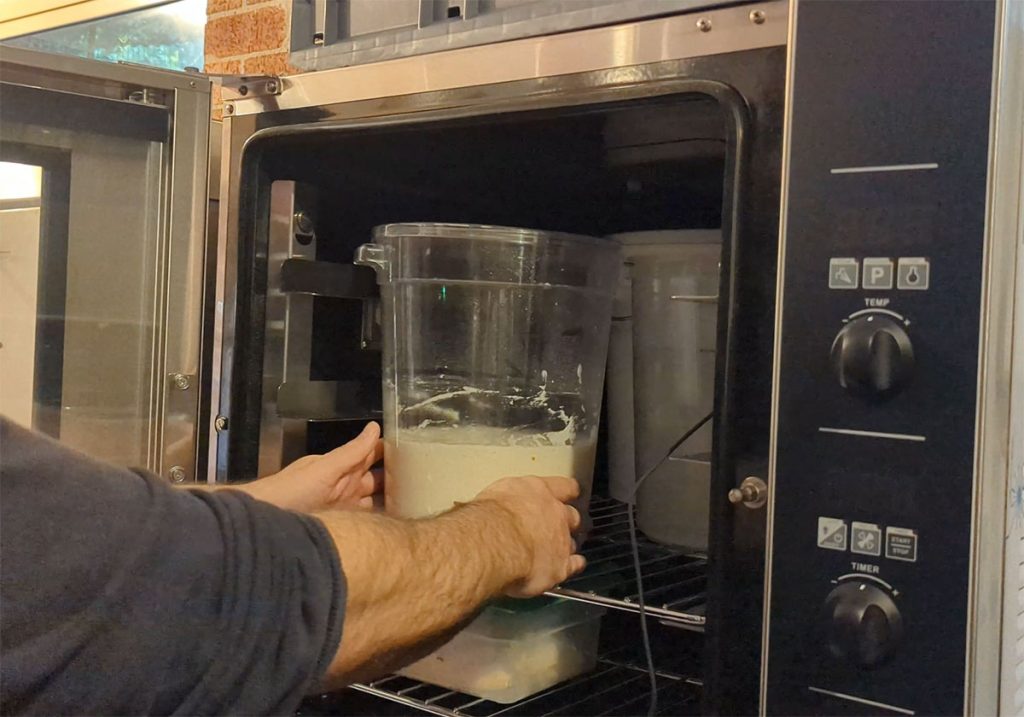
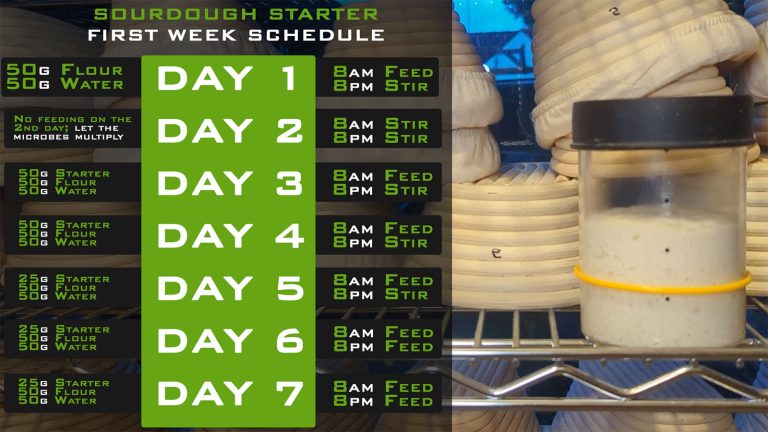
If my starter — Suzie — has been in the fridge, I give it multiple feeds to bring it back to life and reduce acidity.
My feeding approach:
- To reduce acidity: Feed at 1:10:10 (1 part starter, 10 parts flour, 10 parts water).
- Just before baking: I use 1:2:2 or 1:5:5 — these ratios let my starter triple in size.
Every starter behaves differently depending on flour, environment, and hydration. This is just what works best for me in my microbakery setup.
Step 1: Break Up the Starter
- Add about 95% of the water into the mixer bowl.
- Hold back the last 5% to dissolve your salt later.
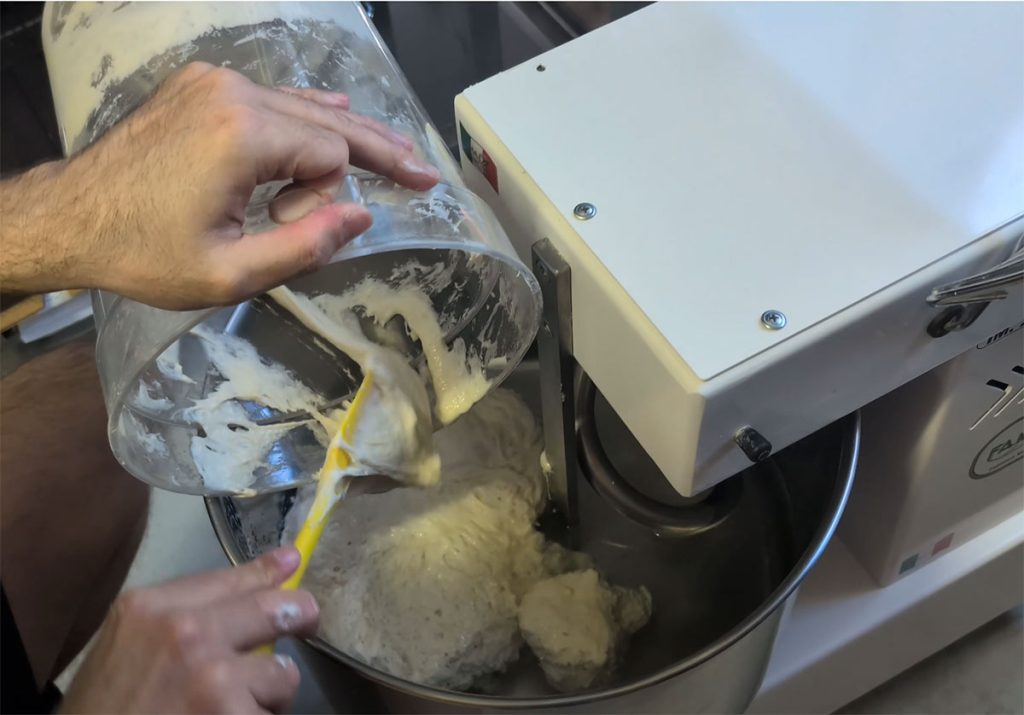
- Add all of your sourdough starter as per your recipe.
- Mix on low speed for a few minutes until the starter is fully incorporated into the water.
Step 2: Fermentolyse — How to Mix Sourdough in a Spiral Mixer
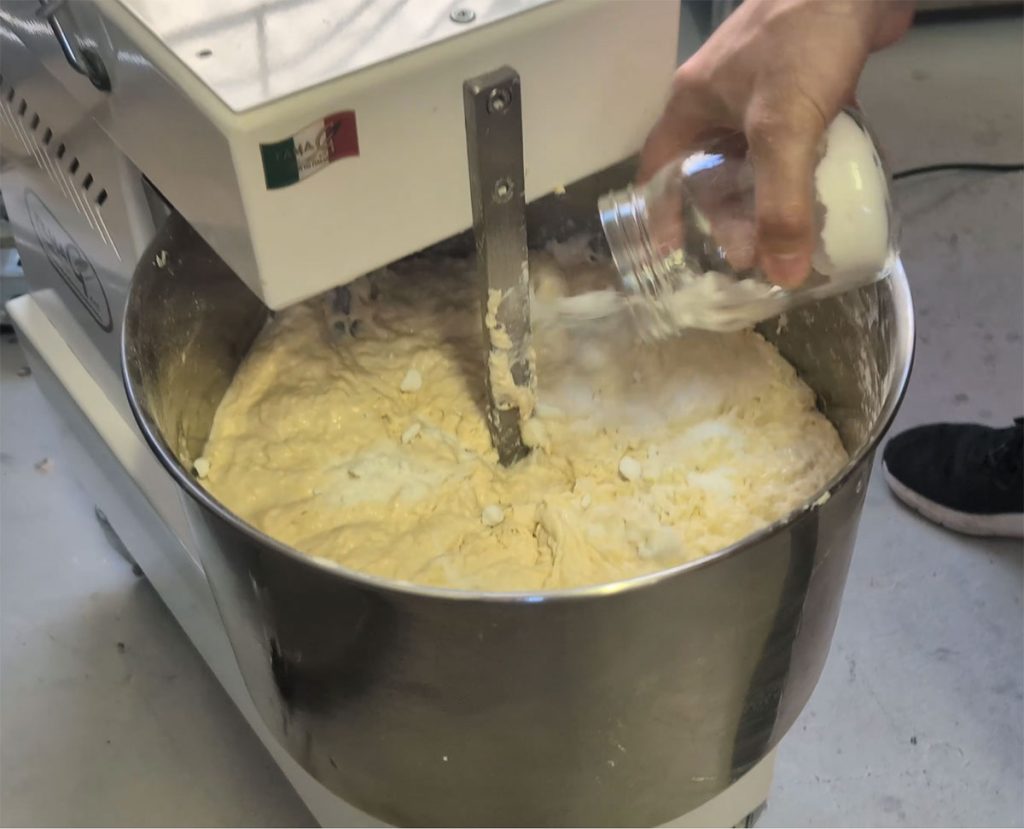
- Add the flour to the spiral mixer in two parts:
- Add the first half and mix until there are no dry spots.
- Add the second half so no flour sticks to the bottom of the bowl.
- Mix on low speed for 5 minutes (I use speed 2 of 10 on my Famag 20).
- Let the dough rest for 30 minutes — this works like an autolyse, letting the flour hydrate and gluten begin forming without overworking the dough.
🙋♂️ Why fermentolyse instead of autolyse?
- Fermentolyse adds the starter from the start, jump‑starting fermentation, shortening the process, and helping gluten develop faster — perfect for busy bakers who don’t want the extra wait.
Step 3: Add Salt, Remaining Water & Finish Mixing
- Add half the salt and half the reserved water. Mix for 20 seconds.
- Add the rest of the salt and water.
- Increase the mixer to medium speed (speed 5 on the Famag).
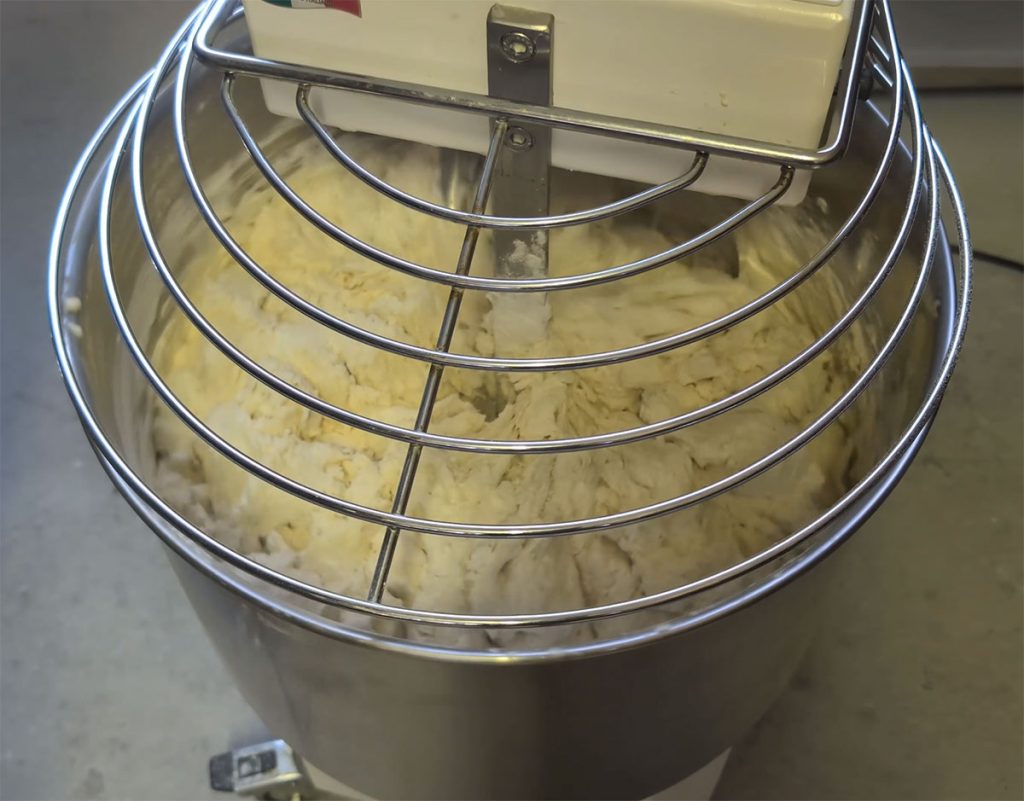
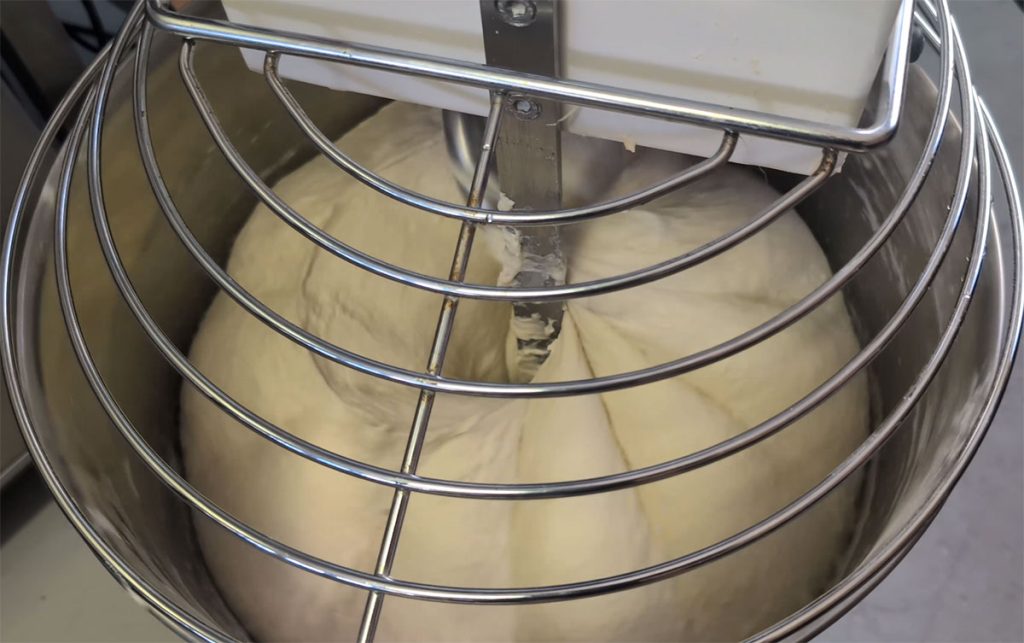
- Mix for 90 seconds to 2 minutes, until the dough:
- Pulls cleanly from the sides of the bowl
- Gets that signature “pumpkin” look
⚠️ Be careful:
- Spiral mixers can over‑mix quickly.
- You can fix slightly under‑mixed dough with stretch and folds later — but once it’s over‑mixed, it becomes sticky and weak.
👉 Why stop short of full gluten development?
- Gentle mixing keeps dough strong while preserving flavor and color.
- Too much oxygen oxidizes the flour — leading to tight gluten, dense or rubbery bread, and stalled bulk fermentation.
Step 4: Rest & Bulk Fermentation
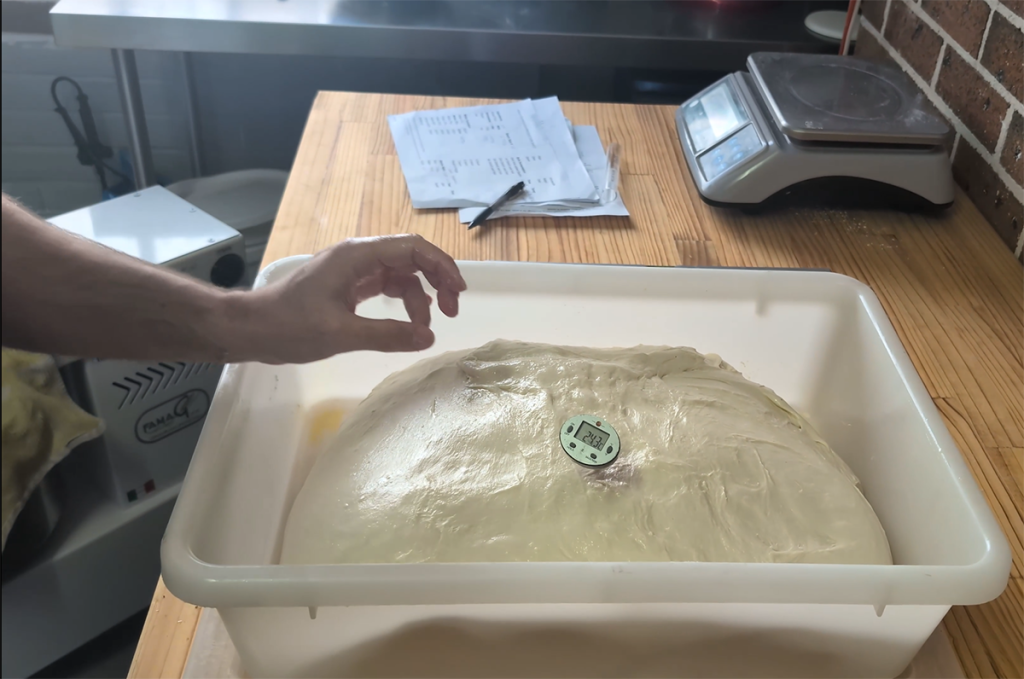
After mixing, leave the dough in the bowl to rest and relax before starting bulk fermentation. (The shaping and proofing steps will follow later — you can see my full process in the video linked at the bottom of this blog post.)
Because we didn’t mix to full gluten development, I recommend doing at least two stretch and folds about 30–45 minutes apart. If the dough still looks flat 45 minutes after your last fold, go for a third fold. But if you see the dough holding a nice curve between folds, that’s a sign you can stop.
I usually do three folds in total, but I’ll check the dough on the third to see if it really needs it. If I’m aiming for a more open crumb and want to be extra gentle, I’ll start with one traditional stretch and fold, then switch to two coil folds. Coil folds are great because you tuck under the dough instead of pulling it out too far — it’s a gentler way to build gluten and it also helps move warmth around the bulk fermentation tub during those long ferment periods.
👉 Tip: More folds aren’t always better — too many can overwork and deflate your dough, so stop once it’s strong and holding shape.
📋 Spiral Mixing At‑a‑Glance
- Low Speed: 5 minutes (flour incorporation)
- Medium Speed: 90 seconds–2 minutes (final mix)
- Rest Period: 30 minutes (fermentolyse/autolyse)
- Water Holdback: 5% for dissolving salt later
- Mixer Speeds Used: 2 (low) & 5 (medium)
💡 Final Thoughts
Mixing sourdough in a spiral mixer takes a bit of finesse. Start slow, watch how your dough behaves, and don’t rush. I know it’s tempting to crank the mixer up to top speed after spending all that money, but slow and gentle wins the race! Save the hard mixing for yeasted breads.
📺 Watch the video: Mixing Sourdough in a Spiral Mixer – 15 Loaves in a Famag 20
 Print
Print
My White Sourdough Recipe
450g White Bread Flour
100g Active Sourdough Starter
10g Sea Salt
325ml Water (75%)
Morning Sean, Great videos! very informative. I’m setting up a micro bakery from scratch at home (Bundaberg QLD) with the plan to do white sourdough loafs to sell to family and friends (about 20 units only in the beginning). Seeing how you’ve done your set up has really helped me with the initial planning with regard to the equipment etc. Could I ask what size are your cane proving baskets – bannetons? and where did you purchase them? I’m particularly interested in the heights as I’m currently looking at my oven options (what to buy Chinese/European, gas or electric, and the height of the oven chamber particularly), I need to be sure the crown is not too low. With your experience what would be the expected oven spring? and the total height of the loafs once baked. I’m thinking to buy 25x15x8 cm bannetons, or 28x15x8 cm – oval shaped. Thanks for the support. Regards Kevin
Very very sorry Kevin for the late reply, didn’t get any notifications, you probably already solved this problem lol! but my bannetons are 25cm/12 inch.
I am glad my video has helped you plan for your new micro bakery and good luck with it!
Wow Sean, this is simply amazing. I’ve been baking sour dough for about 2 years. Started off they were like bricks, then gradually they got better, now they have gone back to bricks and I can’t work out why. I’ve read and read and watched video after video, have more sour dough books than a library. This video is by far the very best I have seen. You have a fantastic way of explaining and showing how things (and why) they are done. I’ve learned so much (especially about what I am doing wrong!!). I have a very small Famag (the smallest available5 kg). It is wonderful, I love it. But I have been using it totally incorrectly, on much too high a speed and for too long. Thank you so much. And I love you more because you are an Aussie (like me!!!)
Hey Jennnie, and welcome fellow Aussie! Famag 5kg is a great little spiral mixer, great for small batches, i’m very happy to hear that my videos have helped you.
What was it you were doing wrong?
btw sorry for the late reply I did not get any notification about new posts.